

Comparing Certifications
PMP vs PRINCE2 vs CPI

There are plenty of ways to become a Project Manager, but finding the right path can be difficult. There are many options including the formal University approach or by working towards a certification.
This can be confusing.
In fact, this article was prompted by a subscriber who reached out to me to clarify the difference between the different certifications available for future project managers.
In this article, we will look at the two giants in the market - PMP and PRINCE2 - and compare them with the certification body that I work for, the Center for Project Innovation (CPI).
My aim is to be as objective as possible and compare the strengths and weaknesses of the three certifications so that you can make an informed decision when you decide to make the next important step in your career.
My Journey
Firstly, let me share my personal experience when I was in a similar situation, trying to figure out my next move.
It all began during the pandemic, and, like many others, the lockdown allowed me to reflect on my happiness and satisfaction with my current role.
I approached my next step using a supply-and-demand perspective.
I approached this task using Seek, a popular job site in Australia. To gain insights into job demand, I conducted general keyword searches to determine which career paths were more sought after than others.
After entering "Project Management" as the general search term, I was presented with 45,000 job listings for individuals with skills in project management.
This was a great start, so I began searching for training opportunities in the market.
I felt confident taking on the project management training, given my experience managing projects in my previous role. However, I couldn't help but feel that there was always room for improvement. Learning how to do a project more effectively seemed like a smart choice, given the high demand for these skills and the chance to enhance the projects I was currently working on.
I chose not to pursue certification - at the start.
I actually took advantage of the free short courses offered by my local University. This was an excellent starting point and helped me to clarify my next course of action.
After considering my options, I decided to pursue a Master of Project Management at the University of Victoria in Melbourne, Australia. This proved to be a great first step in expanding my professional network.
The University study used the Project Management Body of Knowledge (PMBOK) as its primary reference and supplemented it with research from respected PM academics.
During this time, I was lucky enough to start working with the CPI in Australia. I am now living in Dubai and growing the brand and our certifications in the region.
So, let’s start with what a certification is and how it is different from a qualification.
Certification vs Qualification
Certifications and qualifications are both credentials that signify a level of proficiency or competency in a particular field, but they differ in their scope, validation process, and recognition.
Certification usually involves completing a training program or course and passing an examination administered by a recognised authority or organisation.
It demonstrates that an individual has acquired a defined set of skills and knowledge within a particular domain.
Certifications are often industry-specific and may be required for certain jobs or roles. However, they may not always carry the same level of recognition or standardisation across different industries or regions.

On the other hand, qualifications refer to a broader range of credentials, including academic degrees, diplomas, or certificates awarded by educational institutions or government bodies.
Qualifications typically involve a more comprehensive assessment of an individual's knowledge, skills, and competencies over an extended period of study or training.
They often carry a higher level of recognition and are widely accepted as evidence of a person's capability or expertise in a given area.
For example, a bachelor's degree in computer science from an accredited university signifies a certain level of expertise in the field, whereas a certification like CompTIA A+ demonstrates proficiency in IT hardware and software troubleshooting.
PRINCE2
The PRINCE2 (Projects IN Controlled Environments) certification is widely recognised for its structured approach to project management.
One key strength is its emphasis on clearly defined roles and responsibilities.
Additionally, PRINCE2 provides a flexible framework that can be tailored to suit the specific needs of different projects, industries, and organizations. This adaptability allows project managers to apply PRINCE2 principles and processes effectively, regardless of project size or complexity.
Moreover, PRINCE2 advocates for regular project reviews, enabling teams to identify issues early and make necessary adjustments to keep the project on track.
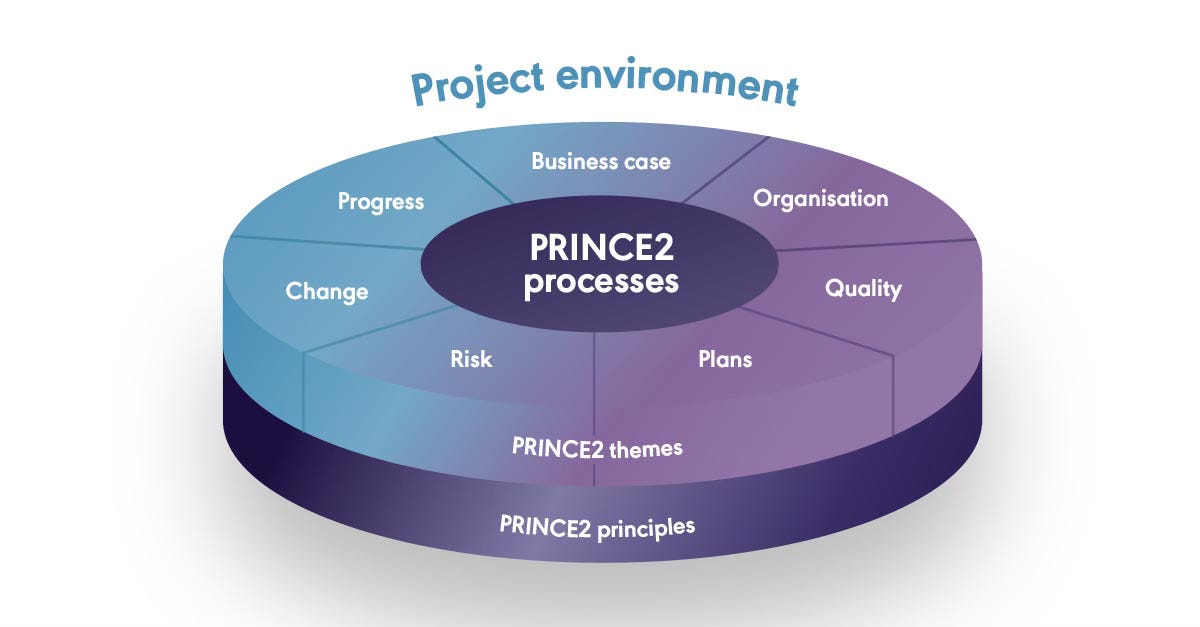
One weakness of PRINCE2 is its heavy emphasis on documentation, which can sometimes lead to bureaucratic overload, especially for smaller projects. Some teams may perceive This extensive documentation requirement as overly rigid or burdensome, particularly in fast-paced environments where agility is prioritised.
Additionally, PRINCE2's structured approach may not always be suitable for highly innovative or creative projects that require more flexibility and autonomy for experimentation. In such cases, adhering strictly to PRINCE2 principles may stifle innovation and hinder adaptability.
To become a PRINCE2 pracitioner you need to sit a 150 minute online test.
Therefore, while PRINCE2 offers many benefits in terms of project governance and control, project managers should carefully evaluate its suitability for each project context to maximize its effectiveness.
Summing Up
🏰 Structured approach to project management.
🎯Emphasis on clearly defined roles and responsibilities.
🔄Adaptable: tailored framework for various projects, industries, organizations
📑Heavy documentation emphasis.
🚫Innovation challenge: Structured approach may stifle creativity, hinder adaptability.
📝Certification process: 150-minute online test.
Project Management Institute (PMP)
The Project Management Professional (PMP) certification is one of the most recognised credentials in the field.
One of its key strengths lies in its comprehensive coverage of project management principles, through its Project Management Body of Knowledge (PMBOK). I can attest that PMBOK provides very good information. In particular the 12 principles serve as a mini-MBA, providing guidance on the management angle of project management.
However, obtaining a PMP certification also comes with its challenges and limitations. Notably a weakness is the rigorous exam requirements, which can be daunting for candidates. Both PRINCE2 and PMI do not release their exam failure rate, however anecdotally I can assure you that this is a very difficult exam.
The exam covers a wide range of topics, requiring extensive study and preparation, often necessitating a significant time commitment and payment for PMP preparation courses.
Additionally, the certification requires ongoing maintenance through continuing education credits, which may pose challenges for professionals balancing work and personal commitments.
Furthermore, while the PMP certification offers a solid foundation in traditional project management, it may not fully cover, Agile-based approaches, which are increasingly important in today's project landscape.
As such, PMP-certified professionals may need to supplement their skills with additional certifications or training to stay competitive.
Summing Up
🎓 The PMP certification is highly recognised.
💪 Comprehensive coverage via PMBOK, akin to a mini-MBA 📘.
📝 Rigorous application process and exam requirements pose challenges for candidates.
📚 Extensive study and preparation required due to wide exam coverage.
🔄 Ongoing maintenance needed through continuing education credits.
📉 Exam failure rate undisclosed, but anecdotal evidence suggests difficulty.
Center for Project Innovation (CPI)
Firstly let me start by being transparent and declaring that I am a Certified Project Trainer with CPI and I have certified hundreds of students.
The certification from CPI takes a different angle to PRINCE2 and PMP in that it doesn't rely on one approach. Rather, it takes the best of the available methodologies and gets the student confident to use them for context of their organisation.
Based on my experience delivering this training, we are able to generate great discussion around the project issues and challenges that project managers face. This is the part I enjoy as a facilitator.
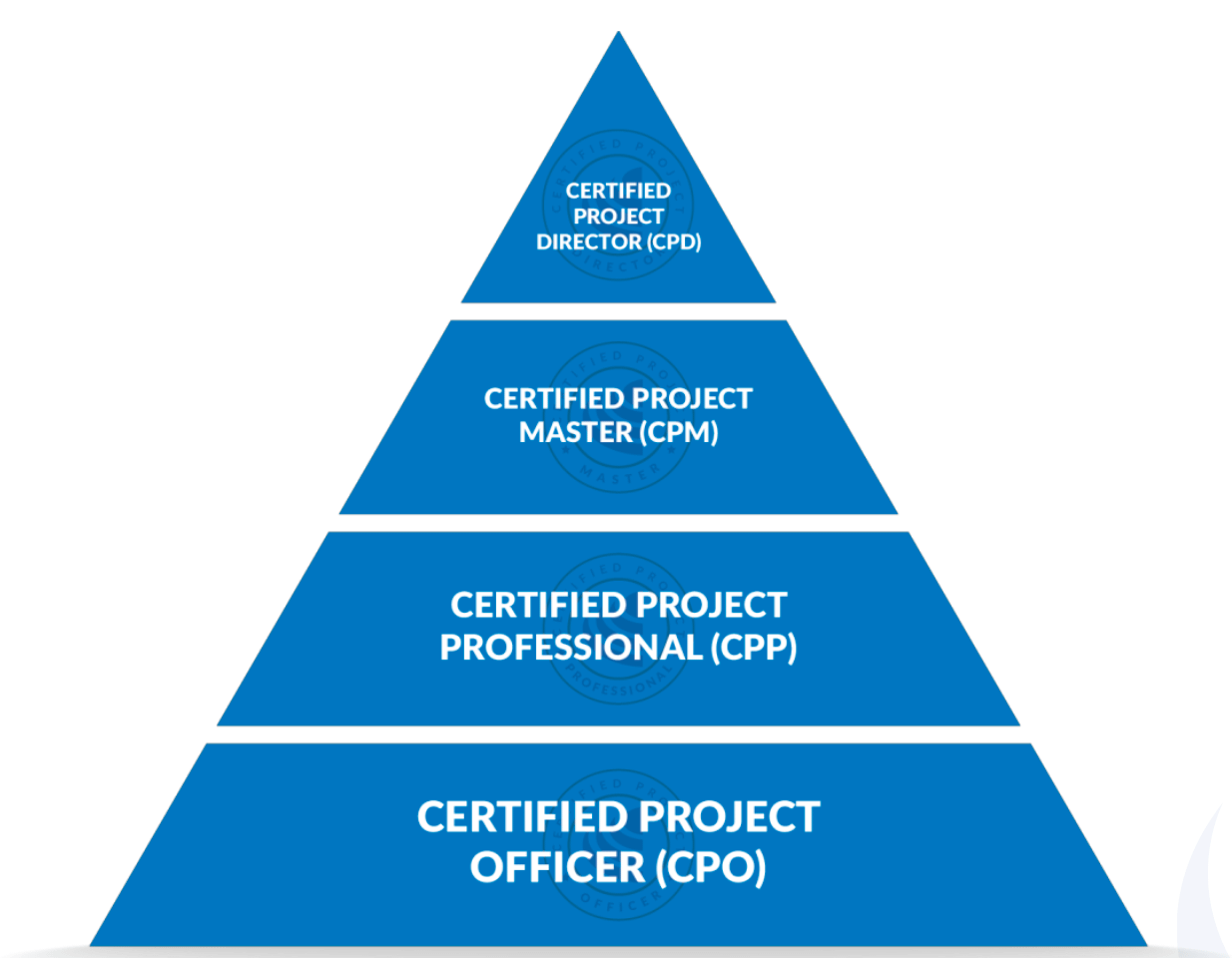
There are four levels of certification with CPI and the certification is awarded based on the students level of experience and skills.
Also, the novel thing about the certification is that there is no exam. The assessment is based on having the training and then sitting an interview to determine which level that the student is at.
The certifications are for life and there is no need to pursue professional development units in order to keep hold of the certification.
The positive feedback that I have received throughout the course is the reason I keep coming back. Providing the tools for people to become more efficient in their project delivery is also something that I love doing. Time and again.
Summing Up
💡 CPI certification integrates various methodologies.
🗣️ Facilitators generate dynamic discussions on project challenges.
📈 CPI offers four certification levels, tailored to expertise and experience.
📝 There are no exams.
🎓 Certifications are for life.
👍 Positive feedback fuels our ongoing commitment to improve project outcomes.
In Conclusion
I hope this helps to differentiate the three project management pathways. I really enjoy delivering the training to people who want to get better at delivering projects and I hope this article helps you out.
For this story only, I have opened up the comments section for free subscribers.
If there is anything I have missed or you would like to catch up with me to discuss certifications in more detail then please leave a comment.